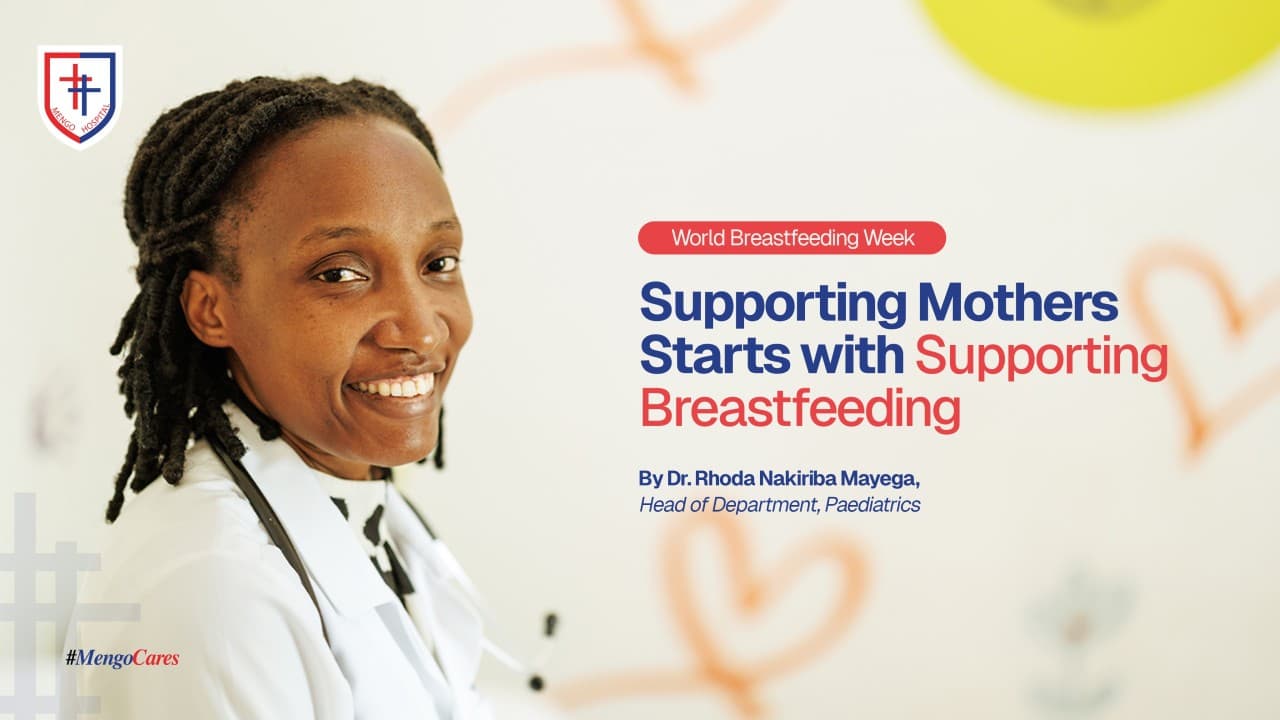
By Dr. Rhoda Nakiriba Mayega, Head of Department, Paediatrics, Mengo Hospital
Every day, I meet parents who want to give their children the very best start in life, and one of the first questions many ask is,
"Am I doing enough for my baby?"
One of the most powerful ways parents can support their child's health from the very beginning is through breastfeeding.
Breastfeeding is much more than feeding a baby. It is the foundation for healthy growth, development, and protection against illness. It provides babies with the nutrients they need during the first months of life while also supplying antibodies that help protect them from common childhood infections. For many babies, breast milk is their first line of defense as their immune systems continue to develop.
The World Health Organization recommends exclusive breastfeeding for the first six months of life. During this period, breast milk provides all the nutrition and hydration a healthy baby needs. As complementary foods are introduced after six months, breastfeeding can continue alongside a balanced diet as recommended by a healthcare professional.
However, while breastfeeding is natural, it is not always easy.
Many new mothers experience challenges, particularly during the first few days and weeks after delivery. Some worry that they are not producing enough milk. Others experience discomfort, difficulty with latching, or uncertainty about whether their baby is feeding well. These concerns are common, and they should never discourage mothers from asking for help.
As healthcare professionals, our role is not only to care for babies but also to support mothers throughout their breastfeeding journey. A few words of encouragement, practical guidance on positioning and attachment, or simply reassuring a mother that she is doing well can make a significant difference to her confidence.
We often remind families that breastfeeding is not solely the mother's responsibility. Successful breastfeeding requires the support of the people around her.
Fathers play an important role by offering emotional encouragement, helping with household responsibilities, and ensuring mothers have time to rest and recover. Grandparents, relatives, and friends can also create a supportive environment that allows mothers to focus on caring for their newborns without unnecessary pressure or criticism.
Support should also extend beyond the home.
Many mothers return to work while they are still breastfeeding. Employers who provide supportive workplace environments such as reasonable flexibility and private spaces where mothers can express breast milk help mothers continue breastfeeding while balancing their professional responsibilities.
As pediatricians, we also encourage mothers to seek help whenever they have concerns. Whether it is difficulty with feeding, concerns about weight gain, or questions about breastfeeding after returning to work, early advice from trained healthcare professionals can prevent small challenges from becoming larger problems.
Supporting mothers and babies begins long before a child is born. Through antenatal education, maternity services, neonatal care, and paediatric follow-up, our multidisciplinary teams work together to provide families with practical information and compassionate support at every stage of their journey.
World Breastfeeding Week is an opportunity to celebrate mothers, but it is also a reminder that breastfeeding succeeds when communities choose to support it. Healthcare workers, families, employers, and policymakers all have a role to play in creating environments where mothers feel informed, encouraged, and empowered.
When we support mothers, we invest in healthier children, stronger families, and a healthier future for all.
About the Author
Dr. Rhoda Nakiriba Mayega is a pediatrician at Mengo Hospital with a passion for child health, preventive care, and supporting families through every stage of a child's growth and development. Through clinical care and community health education, she advocates for practices that give every child the healthiest possible start in life.