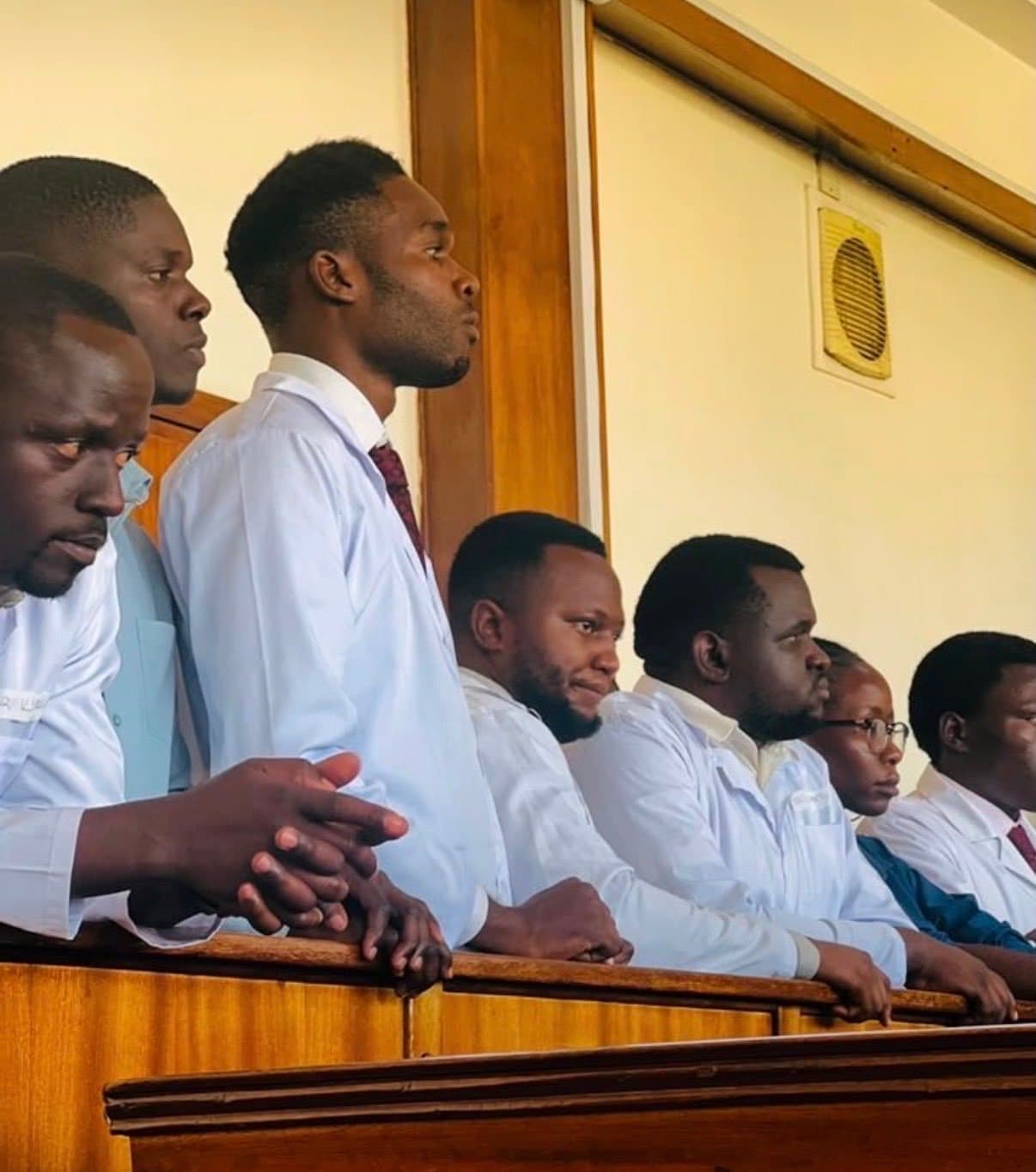
Kampala, 21 September 2026 – Eight medical interns arrested during August protests over deployment and allowances are due back in court today at Buganda Road Chief Magistrates Court, as the wider cohort of more than 2,400 interns continues their mandatory one-year placements in hospitals nationwide.
The Federation of Uganda Medical Interns (FUMI) has called on supporters to attend the 9 a.m. hearing. The eight — including FUMI leaders — were charged with causing a public nuisance after a demonstration along Parliamentary Avenue in mid-August. They were later released on bail of Shs 200,000 each (with sureties) and ordered to appear again.
Their protest formed part of a larger standoff that delayed the start of the 2026/2027 internship year. The Ministry of Health had deployed approximately 2,417–2,490 interns (doctors, pharmacists, dentists, graduate nurses and midwives) to 74–77 accredited centres for the period running from early August 2026 to July 2027. Many initially withheld reporting over concerns that a new policy would scrap or sharply reduce monthly allowances.
Allowance restored, but concerns linger
Cabinet intervened in mid-August, suspending the contested differentiation between government- and privately-sponsored interns. All members of the current cohort now receive a gross monthly facilitation of Shs 1,268,929 (approximately Shs 1 million net after tax) through at least the end of 2026. The Uganda Medical Association (UMA) then directed interns to report for duty, describing the matter as “resolved for now” while pledging to pursue longer-term improvements.
Interns and their representatives have continued to argue that Shs 1 million falls short of covering accommodation, transport, meals and other basic costs, especially given the heavy workloads they carry in understaffed public facilities. Uganda’s doctor-to-patient ratio remains strained, with interns handling a substantial share of day-to-day clinical work.
Broader context
The episode highlighted ongoing pressures in the health sector, including staffing shortages, budget constraints and the gap between the number of medical graduates and available funded placements. Government has expanded the number of internship centres and ordered a wider policy review on training, licensing and absorption of health workers.
As the eight interns face their next court appearance, the majority of the cohort is now on the wards. FUMI and UMA continue to monitor payments and working conditions, emphasising that consistent facilitation and proper supervision remain essential both for the trainees’ welfare and for reliable patient care across Uganda’s hospitals.